

Industrial sites in Western Australia can use rental evaporative coolers, portable air conditioners, industrial cooling fans, misting fans and high-velocity air movers to manage hot working conditions. The right option depends on indoor or outdoor use, humidity, ventilation, cooling requirements, power availability and site layout. Hiring equipment provides a temporary option when existing cooling capacity is insufficient.
Industrial sites across Western Australia can face challenging working conditions during hot weather. Warehouses, manufacturing floors and workshops often trap heat from machinery, roofing and limited airflow, making it harder to maintain suitable working conditions.
When existing cooling systems struggle to keep up, excess heat can affect worker comfort, daily operations and productivity. Temporary cooling equipment can help address specific problem areas, whether the issue is a hot production floor, a poorly ventilated workshop or an enclosed control room.
Hiring industrial cooling equipment offers a flexible way to manage seasonal heat, maintenance shutdowns and temporary increases in demand without investing in permanent installations. The key is choosing equipment that suits the site’s layout, humidity, ventilation and actual cooling requirements.
5 Rental Cooling Equipment Options for Industrial Sites in WA
1. Industrial Evaporative Coolers
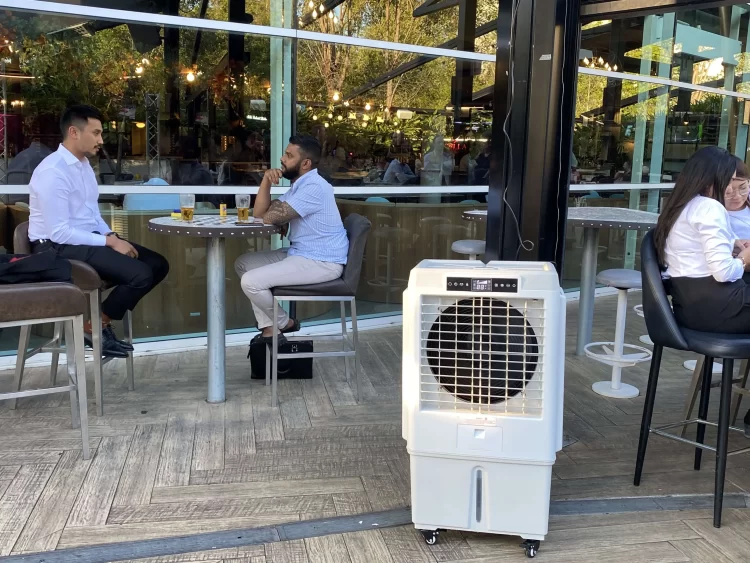
Industrial evaporative coolers use water evaporation to reduce the temperature of incoming air. A fan draws air through a wet cooling medium, and the resulting air is directed into the surrounding space. These units can be useful in well-ventilated warehouses, workshops, loading areas and other locations where a steady supply of fresh air can circulate.
Their performance depends heavily on humidity. Evaporative cooling generally works better in dry conditions because the air can absorb more moisture as water evaporates. In humid weather, the temperature reduction may be limited. The Australian Government’s explanation of evaporative cooling outlines these limitations and the need for appropriate airflow.
Ventilation is equally important. Evaporative coolers introduce cooled, moisture-laden air, so the space needs a suitable path for warmer air to escape. A poorly ventilated room can become increasingly humid, reducing the system’s effectiveness.
For industrial sites with suitable conditions, evaporative cooler hire can provide temporary cooling without installing a permanent system. The required airflow, water supply, operating environment and area being cooled should be considered before selecting a unit.
2. Portable Air Conditioners and Spot Coolers
2. Portable Air Conditioners and Spot Coolers
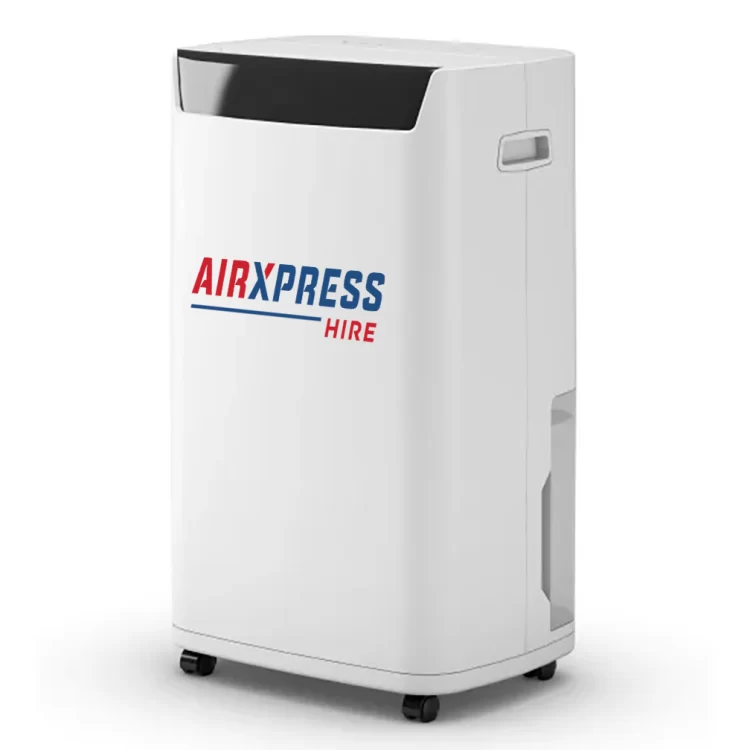
Portable air conditioner and spot cooler hire can provide targeted cooling in enclosed industrial areas, temporary offices, control rooms, equipment rooms and other spaces where workers or sensitive equipment need more controlled temperatures.
Unlike ordinary fans, portable air conditioners remove heat from the air and transfer it elsewhere. Most models require an exhaust arrangement to release warm air outside the space. If the exhaust is not set up correctly, the unit may struggle to cool the intended area effectively.
Cooling capacity is another important consideration. A smaller unit may be suitable for a compact workspace but insufficient for a large room or an area with heat-generating machinery. Room dimensions, ambient temperature, electrical supply, exhaust access and the amount of heat produced by people and equipment should all influence the choice.
For industrial applications, check the unit’s cooling capacity and power requirements rather than choosing based on physical size alone. Our article on sizing a portable air conditioner by kW covers key factors such as room dimensions, ceiling height and heat sources that affect cooling requirements.
3. Industrial Cooling Fans
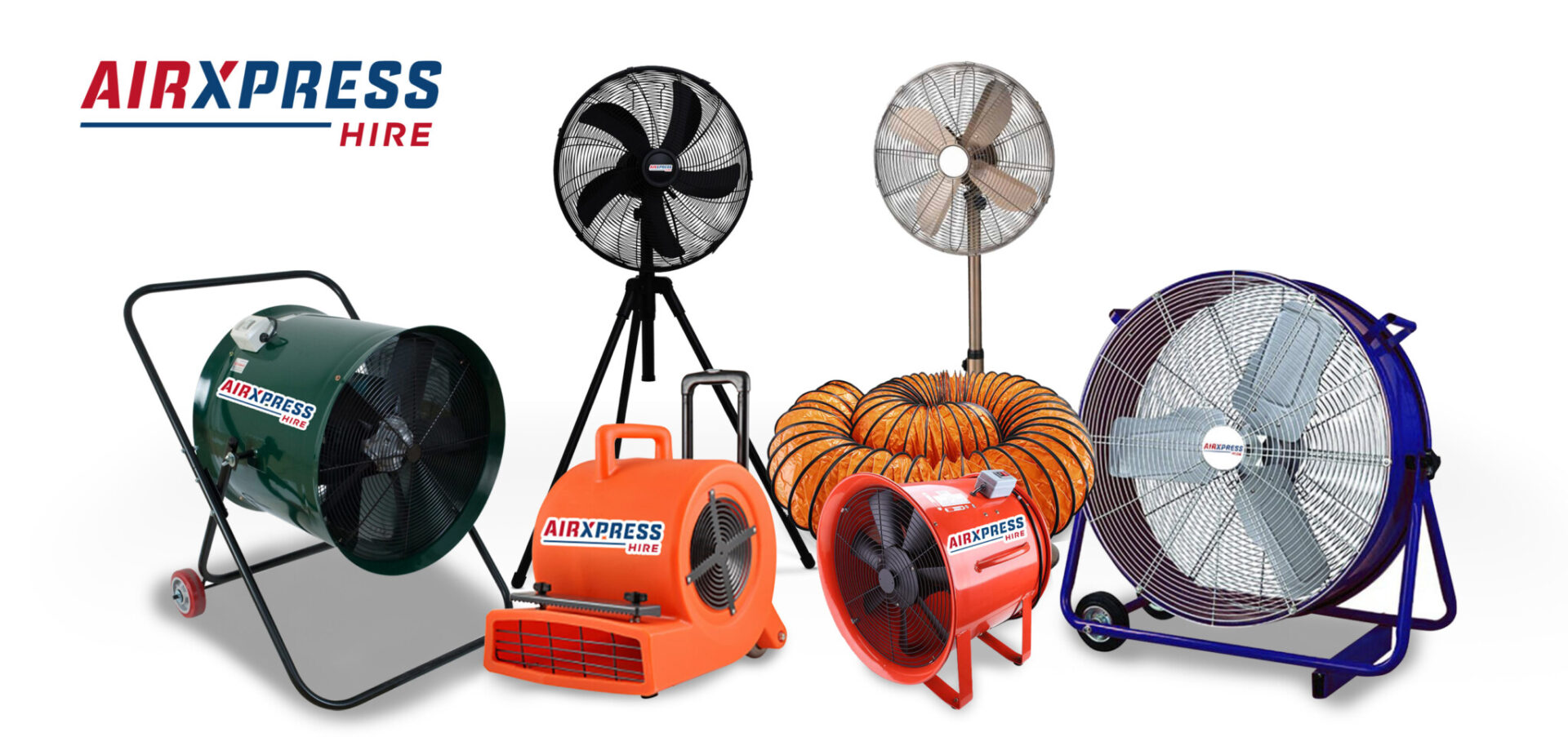
Industrial cooling fans move air across work areas, helping reduce stagnant conditions and improve air circulation. Depending on their size and configuration, they can be used around production floors, warehouse aisles, maintenance areas and workstations where natural airflow is limited.
Fans do not directly lower the temperature of the surrounding air. Instead, moving air can increase heat loss from the body through convection and sweat evaporation, provided environmental conditions allow those processes to work effectively. This makes fans useful in many situations, but they should not automatically be treated as a complete heat-control measure.
Their effectiveness depends on placement and airflow direction. A fan positioned behind an obstruction may have little effect on the intended work area, while excessive airflow can create issues around lightweight materials, dust or loose items. Sites should also consider noise, electrical safety and the movement of airborne contaminants.
Industrial cooling fan hire provides options for temporary air movement without purchasing equipment for occasional use. The appropriate fan depends on the area, required airflow and working conditions.
4. Misting Fans
Misting fans combine forced airflow with fine water droplets to provide evaporative cooling. They can be suitable for outdoor work areas, loading zones, open-sided workshops and certain semi-open industrial environments where ordinary fans may not provide enough relief during hot weather.
As the water droplets evaporate, they absorb heat from the surrounding air. The amount of cooling achieved depends on ambient humidity, airflow, droplet evaporation and the placement of the equipment. Misting fans generally perform better when the surrounding air is relatively dry and there is enough space for moisture to disperse.
Moisture is an important consideration on industrial sites. Some machinery, electrical equipment, stored materials and production processes may be affected by added humidity or water droplets. Misting should not be directed towards equipment or products that must remain dry, and water supply and drainage arrangements should be assessed before use.
For suitable applications, misting fan hire offers a temporary option for outdoor and semi-open spaces. Site managers should confirm that the equipment is appropriate for the environment before installation.
5. Industrial Air Movers and High-Velocity Fans
High-velocity fans and industrial air movers are designed to move substantial volumes of air or direct airflow into specific areas. They can help address stagnant conditions around machinery, workstations, maintenance zones and large spaces where air circulation is limited.
The term air mover can cover different equipment types, so the intended function should be confirmed when hiring. Some units are designed primarily for circulation, while others are intended for drying or ventilation. An ordinary circulation fan should not be treated as a substitute for mechanical extraction when heat, fumes or airborne contaminants need to be removed from a work area.
Where the main problem is stale air or a need to move air through a defined space, industrial ventilation equipment may be more suitable than a cooling-only unit. AirXpress Hire offers ventilation equipment for hire, including extraction fans for applications that require air to be removed rather than simply recirculated.
Before hiring, consider airflow capacity, ducting requirements, discharge location, noise and whether the equipment will interfere with nearby work or materials.
Comparing Rental Cooling Equipment for Industrial Sites in WA
Each option serves a different purpose. The following comparison can help narrow the choices before assessing the site’s specific requirements.
| Cooling Equipment | Best Suited For | Main Advantage | Key Consideration |
| Industrial evaporative coolers | Well-ventilated warehouses, workshops and open industrial areas | Cools incoming air while providing substantial airflow | Performance depends on humidity, ventilation and water supply |
| Portable air conditioners and spot coolers | Enclosed work areas, control rooms and temporary offices | Provides targeted temperature control | Requires suitable exhaust arrangements, power and adequate capacity |
| Industrial cooling fans | Workshops, production floors and warehouses | Improves airflow and air movement | Moves air but does not directly lower its temperature |
| Misting fans | Outdoor work areas and suitable semi-open spaces | Combines airflow with evaporative cooling from water mist | Humidity and moisture-sensitive equipment must be considered |
| Industrial air movers and high-velocity fans | Stagnant areas, workstations and spaces requiring stronger airflow | Directs air into specific areas | Air movement alone may not provide sufficient cooling in extreme heat |
How to Choose the Right Cooling Equipment for an Industrial Site
The best choice depends on the conditions at the site and the problem the equipment needs to solve. Before arranging a rental, assess the following factors.
Indoor or outdoor conditions: An enclosed control room has different requirements from an open loading area. Portable air conditioning may suit a contained space, while evaporative coolers or fans may be more practical in suitably ventilated areas.
Area size and heat load: Consider the dimensions of the space, ceiling height, number of workers, machinery and other sources of heat. A large floor area does not automatically require the largest available unit; airflow distribution and the location of heat sources also matter.
Temperature and humidity: Evaporative cooling and misting depend on water evaporation, so humidity can significantly affect their performance. Air conditioning may be more suitable when a more controlled indoor temperature is required.
Ventilation requirements: Determine whether the site needs air circulation, fresh-air movement or extraction. These are different functions, and choosing the wrong equipment can leave the underlying problem unresolved.
Power and placement: Check voltage, current, plug type and any three-phase requirements before hiring. Confirm that units can be positioned safely without obstructing walkways, emergency exits, machinery access or vehicle movement.
Duration and changing requirements: A short maintenance shutdown may need a different arrangement from a temporary production area operating throughout summer. Consider how long the equipment will run each day and whether the required capacity may change during the hire period.
When Does Industrial Cooling Equipment Hire Make Sense?
Industrial cooling equipment hire makes sense when warehouse temperatures rise during afternoon shifts, production machinery adds heat to workshops, or workers struggle with hot, poorly ventilated areas. It can also help during equipment maintenance when permanent cooling systems are temporarily unavailable.
Practical signs that extra cooling may be needed include persistent hot spots near machinery, stagnant air on production floors, enclosed control rooms overheating, or outdoor loading areas becoming uncomfortable during peak heat. The right equipment depends on whether the site needs lower air temperatures, stronger airflow or improved ventilation.
Before hiring, assess the work area, humidity, power supply and equipment placement. Safe Work Australia’s guidance on managing the risks of working in heat recommends identifying heat-related hazards and implementing suitable controls. Cooling equipment should complement drinking water, rest breaks and appropriate work scheduling.
FAQs
What cooling equipment is best for industrial sites in WA?
The right option depends on humidity, ventilation, the size of the work area and the level of temperature control required. Evaporative coolers may suit dry, well-ventilated spaces, while portable air conditioners are often more appropriate for enclosed areas requiring targeted cooling.
Can evaporative coolers be used in industrial warehouses?
Yes, provided the warehouse has suitable ventilation and the ambient humidity allows effective evaporation. The unit’s airflow capacity and the space’s layout should also be assessed before selecting equipment.
Are portable air conditioners suitable for enclosed work areas?
They can be suitable for control rooms, temporary offices and other contained workspaces. The unit must have adequate cooling capacity, a suitable power supply and a practical way to exhaust warm air outside.
How do I choose between cooling fans and air conditioners?
Cooling fans are primarily used to improve air movement, while air conditioners actively remove heat and provide temperature control. Choose according to the site’s requirements, and consider whether ventilation or extraction is also necessary.
What should I consider before hiring industrial cooling equipment?
Assess the space, heat load, humidity, ventilation, power supply, placement and duration of use. Also consider worker safety, moisture-sensitive equipment and whether the site needs cooling, air circulation or extraction.
Final Thoughts
Industrial cooling requirements vary between enclosed workspaces, large warehouses, workshops and outdoor work areas. Evaporative coolers, portable air conditioners, cooling fans, misting fans and high-velocity air movers each serve different purposes, and no single option is suitable for every site.
The most effective starting point is to identify the problem, assess the operating environment and match the equipment to the required outcome. Businesses should also account for ventilation, electrical requirements and workplace heat risks before putting temporary cooling arrangements into operation.
Need temporary cooling for your industrial site in WA? Call AirXpress Hire on 0451 663 033 to discuss your requirements and get advice on suitable equipment options.