

Why Size Matters More Than Price
When the heat hits, hiring a portable air conditioner seems like a simple fix until you pick the wrong one. The most common mistake we see at AirXpress Hire is customers choosing a unit based on price or availability rather than actual cooling requirements.
Too small: The unit runs 24/7, struggles to drop the temperature, and wastes electricity while leaving you frustrated.
Too large: You pay a premium for cooling capacity you simply don’t need.
Getting the sizing right isn’t just about comfort; it’s about efficiency and cost-effectiveness. This guide walks you through the exact calculation process, ensuring you hire the right kW rating for your specific Australian space.
The Basic Rule: Matching Square Metres to kW
For residential and light commercial applications, a safe starting point is 0.06 to 0.08 kW per square metre of floor space.
20 m² (Bedroom or small office): 1.2–1.6 kW
40 m² (Open-plan office): 2.4–3.2 kW
100 m² (Retail floor): 6–8 kW
200 m² (Warehouse zone): 12–16 kW
Important: These figures assume a standard environment: 2.4 m ceilings, average insulation, moderate occupancy, and no major heat sources. In the real world especially in commercial and industrial settings you almost always need to adjust upward.
Critical Factors That Increase Your Cooling Load
A room isn’t just a box; it’s an environment. Several factors will push your required kW capacity above the basic estimate.
1. Ceiling Height
Standard calculations assume a 2.4 m ceiling. For every additional 0.3 m in height, add 10% to your cooling estimate.
Example: Warehouses with 8–10 m ceilings require vastly more capacity per square meter to cool the massive air volume.
2. Sun Exposure
Australian sun is intense. Rooms with large north or west-facing windows, or poorly insulated roofs, act like greenhouses.
Adjustment: Add 10–15% for high sun exposure.
3. Occupancy
Human bodies generate heat. For every person in a room over the first 2–3 people, add 0.1 kW.
Example: A meeting room with 20 people adds 2 kW of body heat to the load.
4. Equipment & Machinery
Server racks, industrial machinery, commercial kitchen equipment, and even traditional lighting generate substantial sensible heat.
A single server rack can generate 1–5 kW of heat.
Professional lighting rigs (for events) can add several kilowatts.
5. Structural Factors
Poor insulation, single-glazed windows, or open spaces (like loading dock doors or event tents) allow warm air to enter easily, forcing the AC to work harder to maintain the set temperature.
Real-World Sizing Example: The Sydney Office
Let’s apply these principles to a typical commercial scenario.
The Scenario: A 60 m² open-plan office on level 3 in Sydney.
Base Calculation: 60 m² × 0.07 kW/m² = 4.2 kW
Ceiling Height: 3.0 m ceiling (25% higher than standard) → 5.25 kW
Sun Exposure: North-facing floor-to-ceiling windows → Add 15% → 6.0 kW
Occupancy: 15 staff (15 × 0.1 kW) → Add 1.5 kW → 7.5 kW
Equipment: Printers and monitors → Add 0.5 kW → Total 8.0 kW
Our Recommendation: For this space, a single 8 kW unit might work, but air distribution is key. To avoid cold spots, we would likely recommend two 5 kW units placed strategically to ensure even airflow. At AirXpress Hire, we stock 5 kW, 6 kW, 6.5 kW, and larger commercial units to handle exactly this scenario.
Spot Cooling vs. Full-Room Cooling: Which Strategy Wins?
Not every application requires freezing the entire space. Understanding the difference can save you money.
Full-Room Cooling: This is when you need the entire volume of air to reach a set temperature. The calculations above apply strictly here.
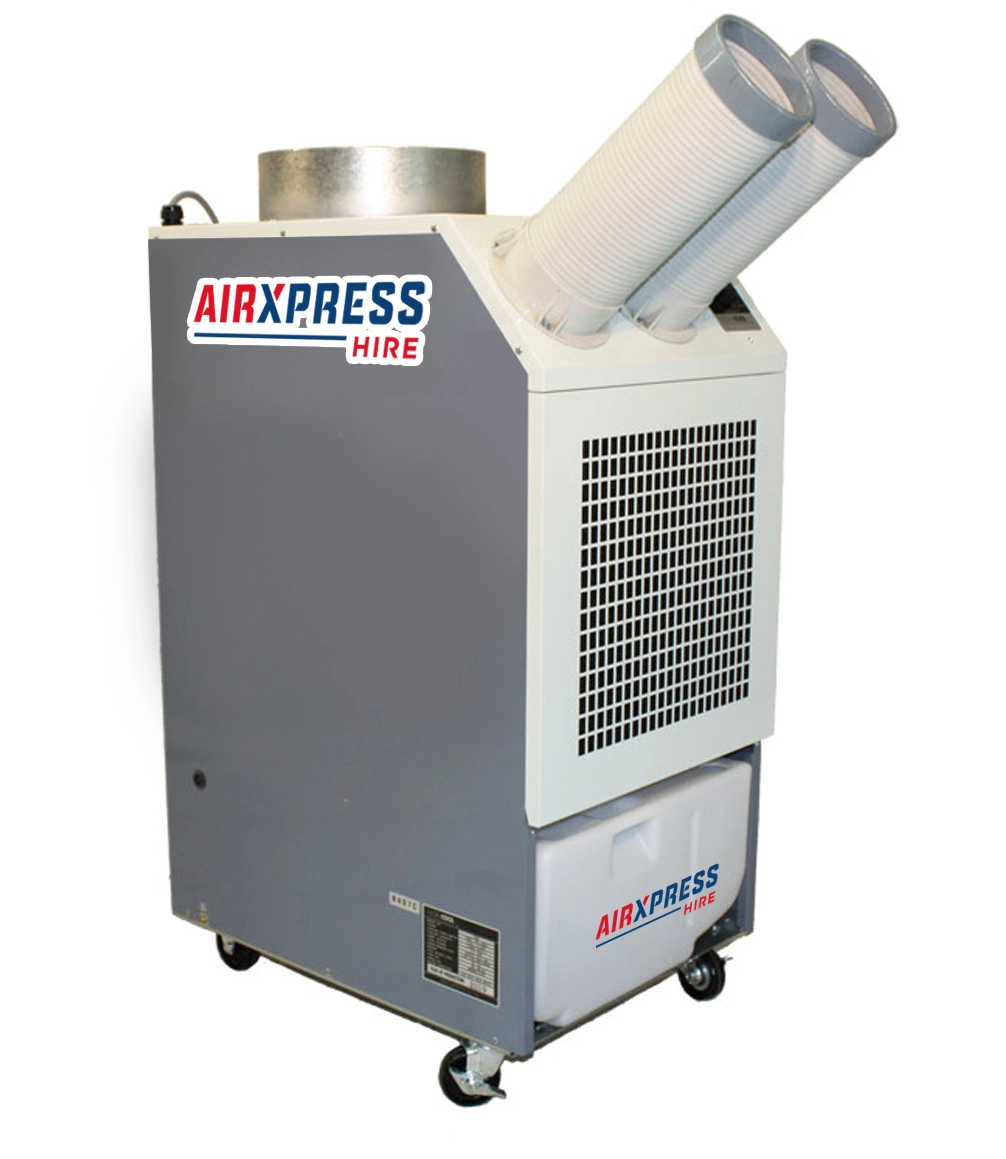
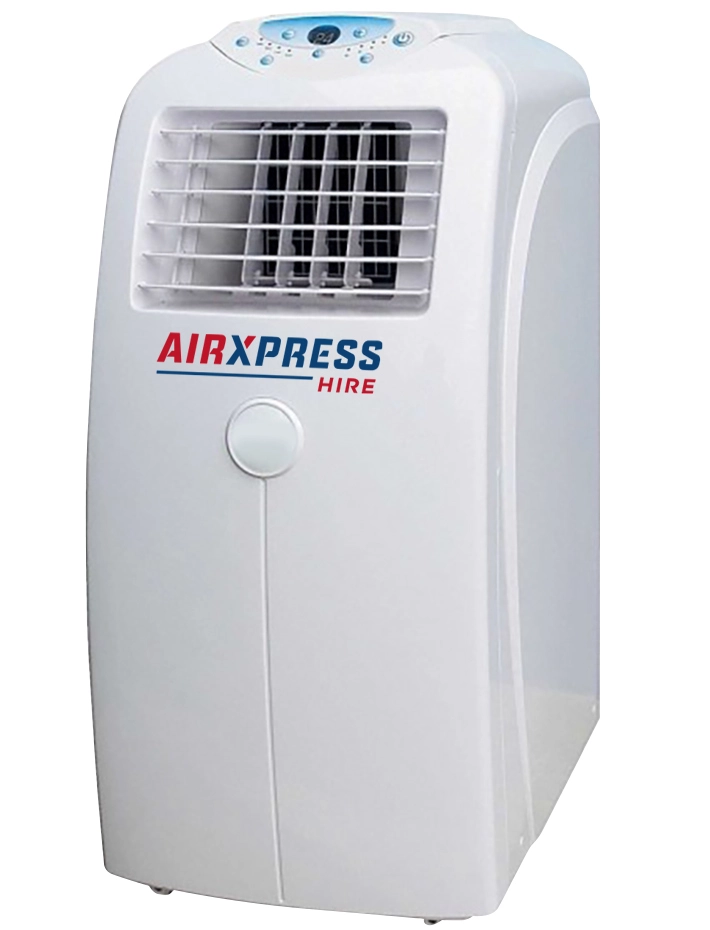
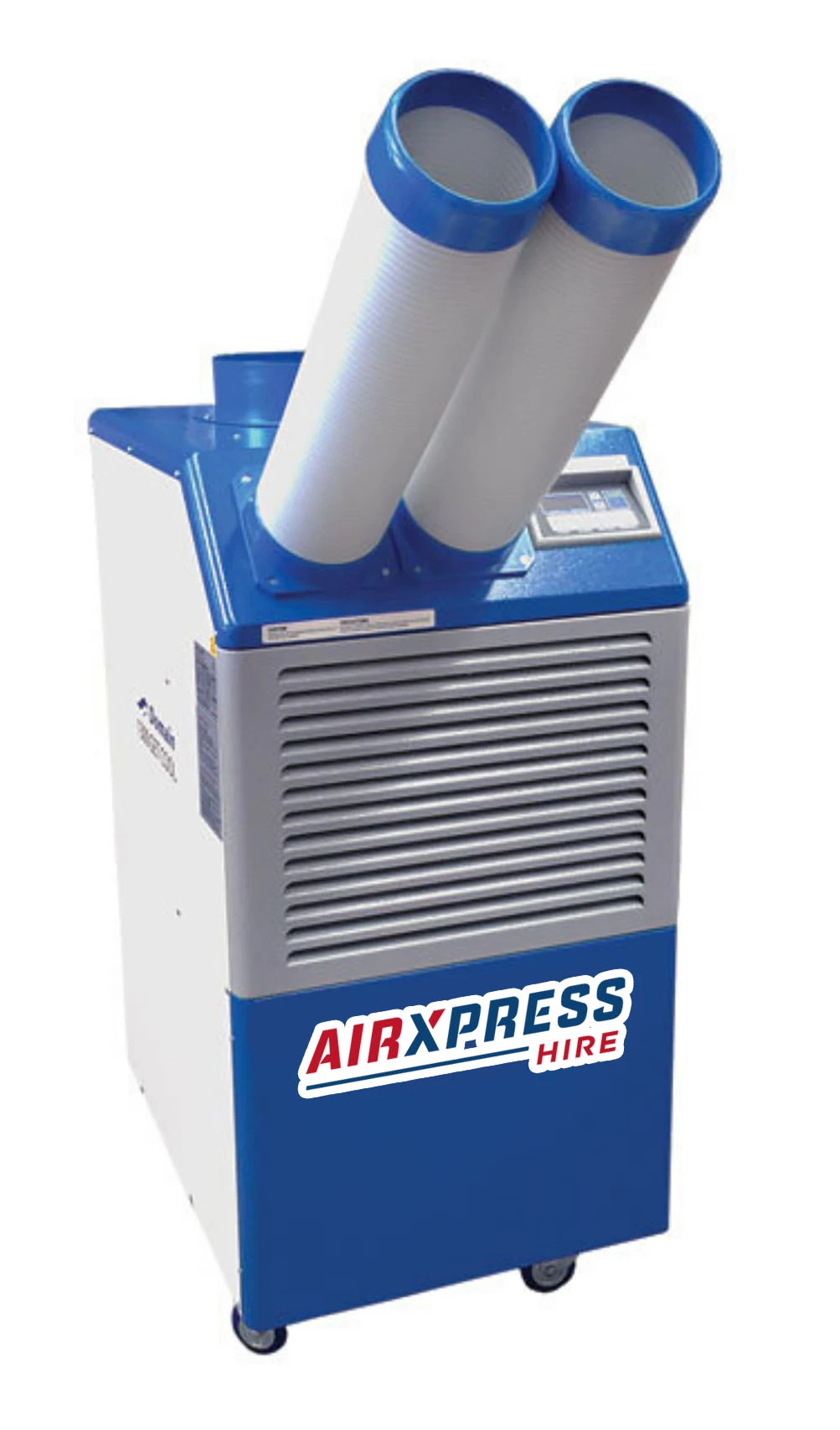
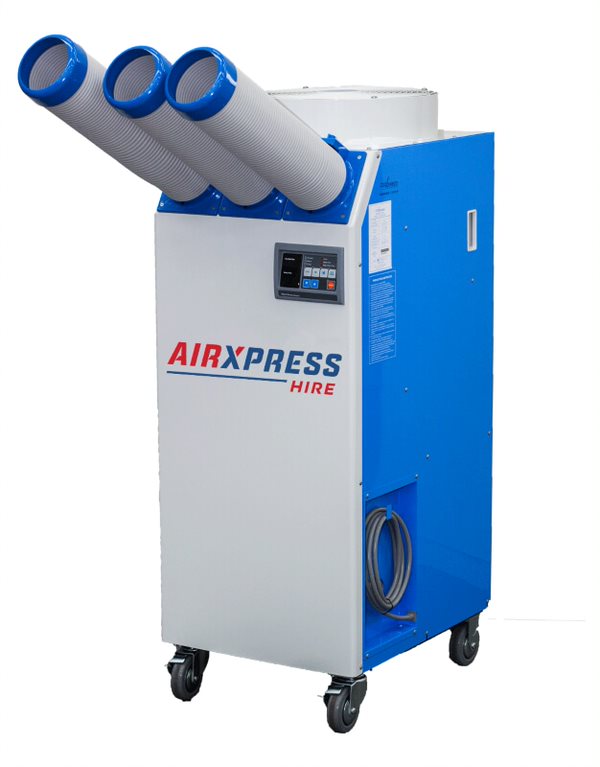
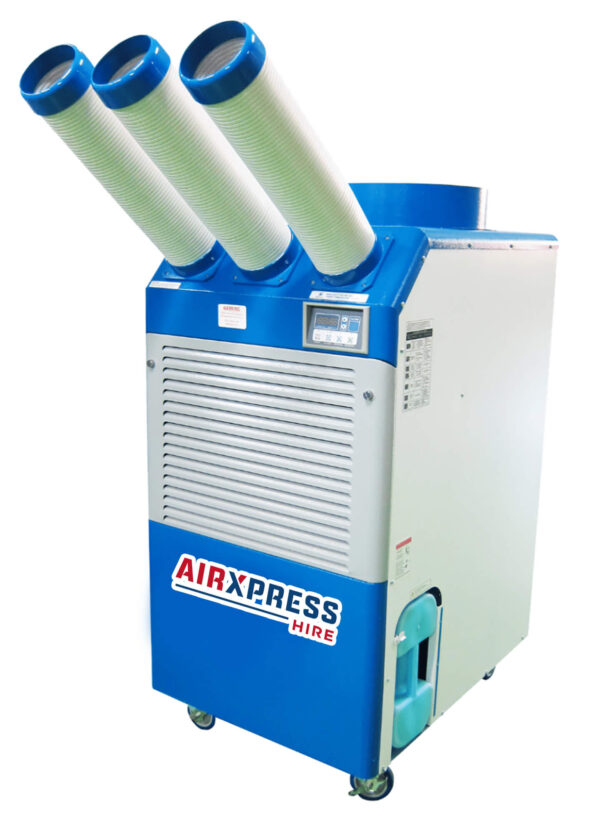
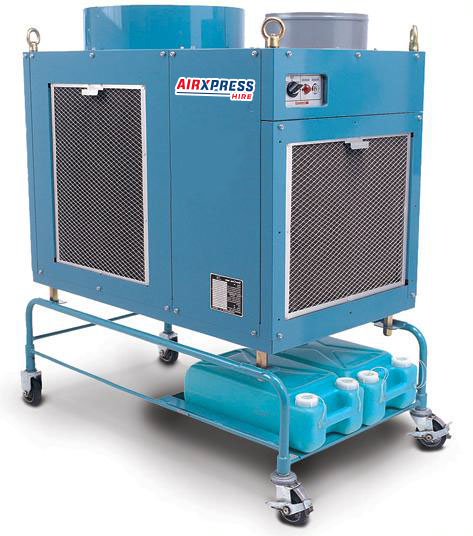
Spot Cooling: Ideal for warehouses, industrial zones, or events. Instead of cooling the whole cavernous space, you direct conditioned air at a specific occupied zone (e.g., a workstation cluster, a stage, a seating area). Spot cooling is significantly more energy-efficient for large spaces and often requires smaller units positioned close to the target area.
One Large Unit or Several Smaller Ones?
For commercial environments with multiple rooms or zones, the layout dictates the strategy.
| Single Large Unit | Multiple Smaller Units |
|---|---|
| Best for open spaces where air circulates freely. | Better for spaces with walls, partitions, or distinct zones. |
| Simpler to set up with one exhaust vent. | Provides redundancy; if one unit fails, others keep working. |
| Ideal for large retail floors. | Allows for targeted cooling in specific areas (like server rooms vs. break rooms). |
If you are unsure about your layout, AirXpress Hire offers site assessment services to design a temporary cooling solution that fits your exact needs.
Common Sizing Mistakes to Avoid
Even with the right calculation, installation errors can ruin performance. Avoid these pitfalls:
Undersizing to save money: This is the most frequent error. An undersized unit runs continuously, never reaches the target temp, and often costs more in electricity than a correctly sized unit would have.
Ignoring the Exhaust Heat: If the exhaust hose isn’t properly routed outside, the hot air recirculates instantly, rendering your cooling useless.
Forgetting Latent Heat: In humid climates like coastal Queensland or after flooding, the unit must work hard to remove moisture from the air. This latent heat load reduces the unit’s effective sensible cooling capacity.
Ignoring the Structure: A portable AC hired for a poorly insulated shed will perform drastically differently than the same unit in a sealed, modern office.
Let the Experts Calculate It for You
If you’re uncertain, don’t guess. The AirXpress Hire team includes qualified HVAC engineers who size cooling systems daily. Provide us with your room dimensions, ceiling height, sun exposure, occupancy, heat sources, and desired temperature and we’ll tell you exactly what to hire.
We have a comprehensive range of rental air conditioners from 5 kW to 10 kW, plus packaged commercial units for larger requirements. With 24/7 availability across Sydney, Brisbane, and the east coast, we ensure you stay cool when it matters most.
Frequently Asked Questions (FAQs)
1. What happens if I hire a portable air conditioner with too much kW?
If the unit is slightly oversized, it will cool the room very quickly and cycle off. However, if it is drastically oversized, it may not run long enough to effectively dehumidify the air, leaving the room feeling cold but “clammy” or humid. It can also lead to higher rental costs for capacity you don’t utilize.
2. Can I use a portable air conditioner in a warehouse with high ceilings?
Yes, but you need to manage expectations. For high-ceiling warehouses, you generally cannot cool the entire volume. The most effective solution is spot cooling placing high-capacity units (often 10 kW to 25 kW) directly next to workstations, machinery, or break areas to cool the people, not the entire roof space.
3. How do I vent the hot air if there are no windows?
Portable air conditioners require proper venting to expel hot exhaust air. If windows aren’t an option, we can provide drop-ceiling plenum kits or wall-venting solutions. For large commercial sites, we can integrate the portable units into existing ductwork. Never run a portable AC without the exhaust hose properly routed outside; it will create negative pressure and actually pull hot air into the room.
4. Do I need to consider the heat from computer servers?
Absolutely. Server rooms and IT closets are unique environments. Servers generate massive sensible heat loads, often requiring dedicated cooling that runs 24/7. For these spaces, we usually recommend dual units for redundancy or specialized in-row cooling units to prevent catastrophic overheating. Always account for IT equipment wattage in your cooling calculation.