


You clean the mould off your bathroom ceiling and think the problem is solved until it comes back again in the same spot. Stronger sprays, bleach, and scrubbing might hide it temporarily, but they rarely stop it for good.
This cycle frustrates thousands of Australian homeowners every year because most people treat mould as a cleaning problem when it is actually a moisture problem.
Cleaning removes visible mould temporarily. It does not remove the environmental conditions that allow mould to grow in the first place.
The real cause is excess indoor humidity.
When indoor relative humidity stays above 60%, mould spores already present in the air begin germinating again. Unless humidity is controlled, mould will continue returning — no matter how often you clean it.
This guide explains:
- Why does mould keep returning after cleaning
- The humidity levels that trigger mould growth
- Why bleach and DIY sprays fail long-term
- Where hidden moisture comes from
- How commercial dehumidifiers permanently stop mould growth
- The correct step-by-step process for lasting mould prevention
Why Does Mould Keep Coming Back After Cleaning?
DIRECT ANSWER
Mould returns after cleaning because the humidity that caused the mould was never reduced. Cleaning removes visible mould colonies, but millions of dormant spores remain on nearby surfaces and in the air. When indoor humidity rises above 60–65% again, those spores reactivate and new mould growth appears within days.
Mould is not simply a surface stain. It is a living fungal colony created by excess moisture.
The visible black or green patches on ceilings, grout, walls, and window frames are only the surface layer of a much larger colony often embedded beneath the material itself. In porous materials like plasterboard, grout, timber, or painted drywall, mould roots (hyphae) penetrate below the visible surface.
This is why mould commonly returns in the exact same location after cleaning.
Even more importantly, cleaning mould without controlling humidity can actually worsen the problem.
Scrubbing or wiping mould releases a large concentration of spores into the air. Without proper air filtration, those spores settle across the room and create new mould colonies when humidity rises again.
Common indoor Australian mould species such as:
- Aspergillus niger
- Cladosporium
- Stachybotrys chartarum
all require one essential condition to grow: sustained humidity above roughly 60% RH.
Below that threshold, mould spores remain dormant and cannot reproduce.
Key Insight
Cleaning removes existing mould.
A dehumidifier removes the condition mould needs to survive.
You can clean mould from a humid room and watch it return within weeks. But mould cannot establish new growth in a room consistently maintained below 55% relative humidity.
What Humidity Level Causes Mould Growth?
DIRECT ANSWER
Mould begins actively growing when indoor relative humidity exceeds 60–65% for 24–48 consecutive hours. At 70% RH and above, visible mould growth can appear within 72 hours on plasterboard, timber, and painted surfaces.
Relative humidity (RH) measures how much moisture the air contains compared to the maximum amount it can hold at a specific temperature.
Warm coastal Australian climates naturally hold more moisture, which is why mould problems are especially common in:
- Brisbane
- Gold Coast
- Sydney coastal suburbs
- Northern NSW
- Tropical Queensland
- Darwin
Australian homes without proper ventilation or humidity control often experience indoor RH levels between 70–90% during humid seasons.
Indoor Humidity Levels and Mould Risk
| Indoor RH Level | Mould Risk | Recommended Action |
| Below 50% RH | None | Ideal humidity range |
| 50–60% RH | Low | Monitor periodically |
| 60–65% RH | Moderate | Improve ventilation immediately |
| 65–70% RH | High | Deploy dehumidifier quickly |
| 70–80% RH | Very High | Immediate humidity control required |
| Above 80% RH | Critical | Active mould growth likely occurring |
The 60% threshold is not arbitrary. Scientific studies consistently show most indoor mould species cannot germinate below this level.
That creates a major advantage for homeowners:
If you keep indoor humidity below 60%, mould cannot regrow — regardless of how many spores are present.
Why Bleach Removes Mould Temporarily But Never Permanently
DIRECT ANSWER
Bleach kills mould on the surface but cannot penetrate porous materials where mould roots are embedded. It also does nothing to reduce indoor humidity, which means mould regrows once moisture levels rise again.
Bleach appears effective because it removes visible staining quickly.
On non-porous materials like tiles or glass, bleach works reasonably well as a surface disinfectant.
But most mould in Australian homes grows on porous surfaces including:
- Plasterboard
- Grout
- Timber
- Brick
- Concrete
- Painted walls
In these materials, mould extends beneath the visible surface layer. Bleach penetration is shallow, so the underlying fungal structure survives and regrows.
Vinegar, tea tree oil, and hydrogen peroxide face the same limitation.
None of these products change the environmental condition responsible for mould growth: excess humidity.
Important
Cleaning mould without running a dehumidifier at the same time often spreads spores throughout the room.
For best results:
- Lower humidity first
- Run a HEPA air purifier or air scrubber during cleaning
- Remove mould only after RH drops below 55%
For a detailed comparison between air purifiers and dehumidifiers, see AirXpress Hire’s guide on dehumidifier vs air purifier solutions.
Where Is the Hidden Moisture Coming From?
DIRECT ANSWER
Recurring mould almost always indicates an ongoing hidden moisture source such as condensation, poor ventilation, rising damp, roof leaks, thermal bridging, or groundwater moisture.
If mould repeatedly appears in the same location, that location is receiving excess moisture consistently.
Common Hidden Moisture Sources
Mould Location | Likely Cause |
Ground-floor corners | Rising damp from slab or masonry |
Bathroom ceilings | Poor exhaust ventilation |
Wardrobes on external walls | Condensation from cold surfaces |
Window frames | Thermal bridging and condensation |
Roof cavity areas | Roof ventilation failure |
Subfloors or basements | Ground moisture infiltration |
Behind splashbacks | Water leaks behind tiles |
A digital hygrometer is one of the best tools for diagnosing mould problems.
Place it in the affected room for 48–72 hours and monitor RH levels.
If humidity consistently remains above 65% in the problem area while other rooms stay lower, a localised moisture source is likely present.
How a Commercial Dehumidifier Stops Mould Permanently
DIRECT ANSWER
A commercial dehumidifier removes moisture from the air continuously until indoor humidity drops below mould’s growth threshold. At humidity levels below 55–60% RH, mould spores cannot germinate or reproduce.
A dehumidifier works by:
- Drawing humid air into the unit
- Condensing moisture into water
- Removing that moisture from circulation
- Returning dry air back into the room
Over time, this process dries:
- Room air
- Walls
- Flooring
- Furniture
- Structural materials
Once humidity drops below mould’s survival threshold, new growth stops.
Why Commercial Units Work Better
Most hardware store dehumidifiers are underpowered for serious Australian mould conditions.
In humid coastal environments, small consumer units often cannot remove moisture fast enough to reduce RH below 60%.
Commercial-grade units remove significantly more moisture per day.
Dehumidifier Type | Extraction Rate | Best Use |
Consumer unit | 10–25 L/day | Small mild dampness |
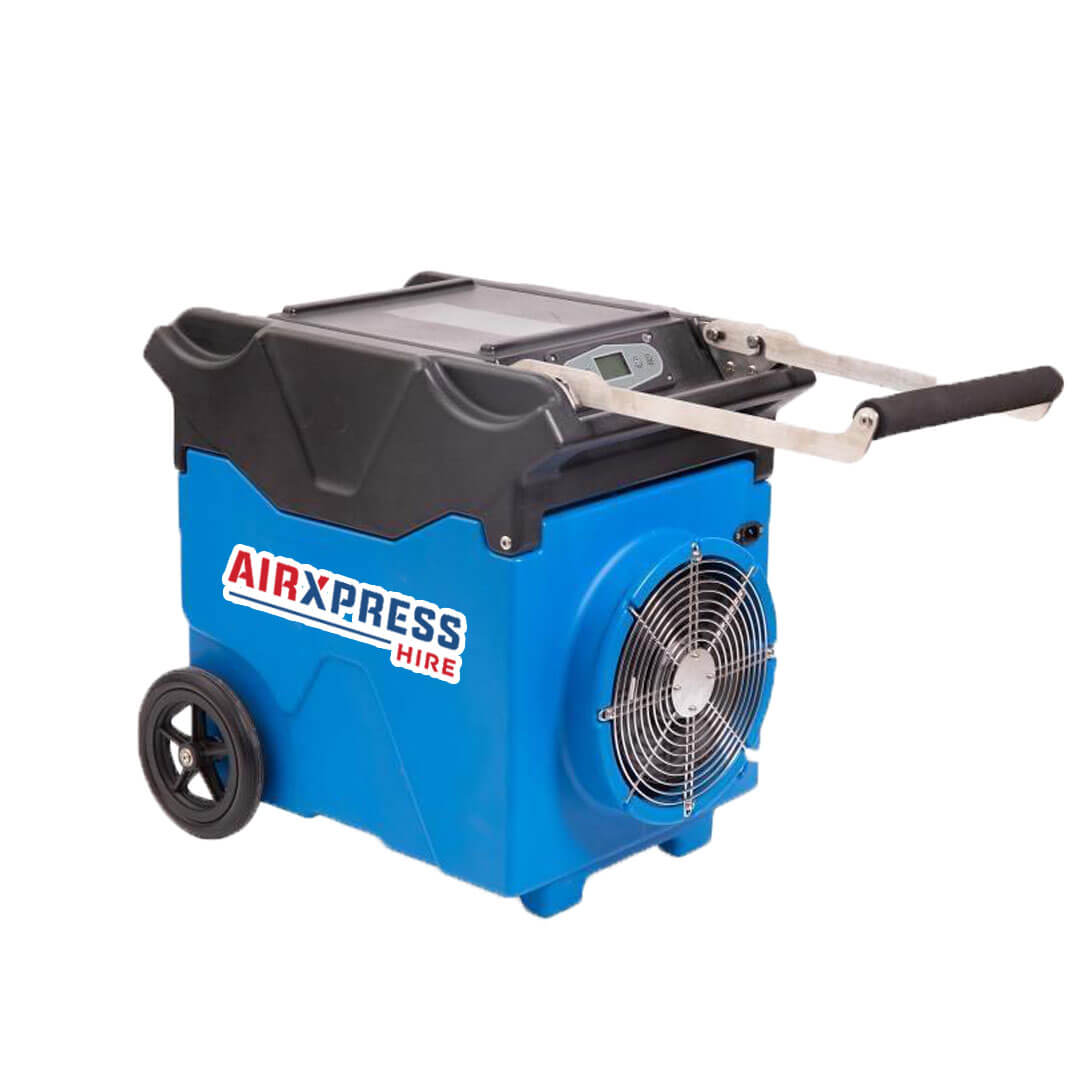
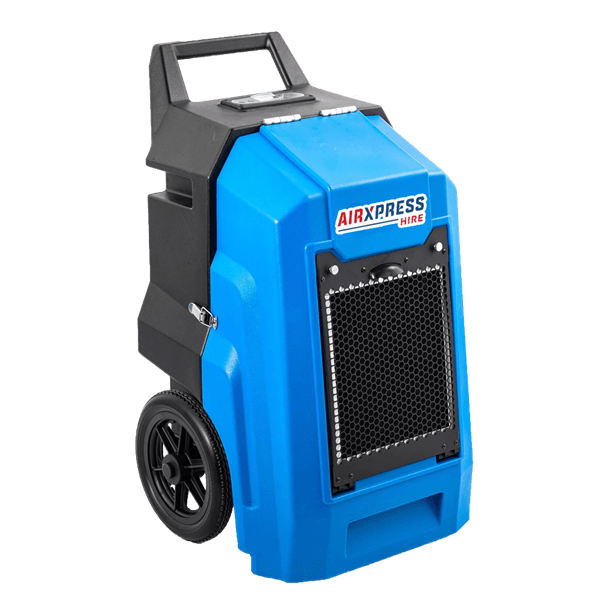
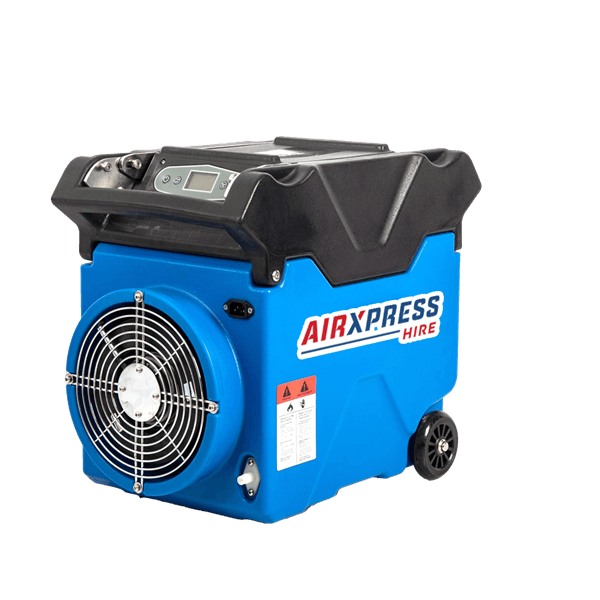
Small commercial | 35–50 L/day | Bedrooms and bathrooms |
Medium commercial | 50–70 L/day | Multi-room mould control |
Industrial commercial | 70–120 L/day | Severe mould and flood restoration |
Professional commercial dehumidifiers typically reduce a standard room below 55% RH within 12–24 hours.
For best mould prevention results, maintain humidity at approximately 50–55% RH.
You can explore commercial dehumidifier options through AirXpress Hire.
The Correct Order to Permanently Fix Mould
DIRECT ANSWER
Permanent mould prevention requires four steps in the correct sequence:
- Identify the moisture source
- Lower humidity below 55% RH
- Remove mould safely
- Maintain long-term humidity control
Most homeowners accidentally reverse this process by cleaning first.
That mistake allows spores to spread into a still-humid environment where they immediately regrow.

Step 1: Identify the Moisture Source
Inspect:
- Roof cavities
- Bathrooms
- Plumbing
- Subfloors
- External walls
- Ventilation systems
Use a hygrometer to confirm elevated humidity zones.
Step 2: Lower Humidity First
Deploy a properly sized commercial dehumidifier before cleaning.
Allow humidity to stabilise below 55% RH.
This usually takes:
- 12–24 hours for moderate humidity
- 24–48 hours for severe moisture problems
Step 3: Remove Existing Mould
Once humidity is controlled:
- Clean visible mould
- Use appropriate mould treatments
- Run a HEPA air purifier during cleaning
- Isolate heavily contaminated rooms if necessary
For improving overall indoor air quality during mould remediation, pairing a dehumidifier with HEPA filtration is highly recommended.
Step 4: Maintain Humidity Control
Long-term prevention depends entirely on maintaining safe humidity levels.
That may require:
- Ongoing dehumidifier use
- Improved ventilation
- Exhaust fan upgrades
- Structural moisture repairs
- Seasonal humidity management
Why Step 2 Is the Most Important
Running a dehumidifier before mould cleaning dramatically reduces regrowth risk.
Lower humidity:
- Reduces spore activity
- Slows mould metabolism
- Minimises airborne spore spread during cleaning
This single step is often the difference between temporary cleaning and permanent mould control.
How Long Should a Dehumidifier Run?
DIRECT ANSWER
A dehumidifier should run continuously until humidity stabilises below 55% RH. In many Australian climates, ongoing operation is required during humid seasons to prevent mould recurrence.
Turning the unit off too early allows humidity to rise again.
In coastal or tropical environments, RH can exceed mould growth thresholds within hours after dehumidification stops.
The best approach is automatic humidity control using a humidistat.
Modern commercial units cycle on and off automatically to maintain target humidity efficiently.
Should You Hire or Buy a Dehumidifier?
DIRECT ANSWER
Hiring is usually best for temporary mould problems, post-flood drying, or seasonal humidity spikes. Buying may make more sense for year-round humidity management.
For most first-time mould problems, hiring a commercial unit is faster and more cost-effective because professional equipment is significantly more powerful than consumer models.
Consumer units often struggle in Australian humidity conditions.
Commercial hire equipment resolves moisture issues faster and reduces the risk of structural damage or expensive remediation.
For a complete cost comparison, see the dehumidifier hire vs buy guide from AirXpress Hire.
What If Mould Has Spread Into Wall Cavities?
DIRECT ANSWER
Wall cavity mould requires professional assessment. A dehumidifier helps immediately by reducing moisture levels inside the cavity, but physical remediation may also be required.
Signs of cavity mould include:
- Persistent musty smells
- Damp plasterboard
- Soft wall surfaces
- Recurring mould with no visible source
Hidden cavity mould can eventually damage structural timber if left untreated.
The recommended sequence is:
- Deploy a commercial dehumidifier immediately
- Reduce humidity levels
- Arrange professional inspection
- Remediate damaged materials if required
Frequently Asked Questions
Does mould come back after painting over it?
Yes. Painting over mould without reducing humidity only hides the problem temporarily. Mould usually returns within weeks if moisture conditions remain unchanged.
Can mould make you sick even if you cannot see it?
Yes. Airborne mould spores can trigger:
- Allergies
- Respiratory irritation
- Asthma symptoms
- Poor indoor air quality
Symptoms that improve after leaving the building may indicate hidden mould contamination.
What humidity level completely prevents mould?
Maintaining indoor humidity below 50–55% RH prevents virtually all common indoor mould species from reproducing.
How long will a room stay mould-free?
Indefinitely — as long as humidity remains controlled below mould’s growth threshold.
Can you hire a dehumidifier urgently?
Yes. AirXpress Hire provides commercial dehumidifier hire for emergency moisture and mould situations across Australia’s east coast.
Need Help Stopping Mould Permanently?
If mould keeps returning no matter how many times you clean it, the missing step is humidity control.
AirXpress Hire supplies professional commercial dehumidifiers capable of removing far more moisture than standard consumer units — helping Australian homes and businesses control humidity fast and prevent mould from returning.
Whether you are dealing with:
- Bathroom mould
- Flood damage
- Coastal humidity
- Condensation issues
- Wet season moisture
- Poor indoor air quality
The right dehumidifier setup can stop mould at its source.