

Temporary cooling solutions can help Sydney apartment residents manage heat when permanent air conditioning is unavailable, unsuitable or being repaired. Options include portable ACs, spot coolers, evaporative coolers, fans and temporary systems. The appropriate choice depends on the space, installation requirements, humidity, noise, building restrictions and how long cooling is needed.
When an apartment’s air conditioner stops working during summer, waiting days or weeks for repairs can quickly become uncomfortable. Similar problems can arise during renovations, when moving into a rental with limited cooling, or when permanent installation isn’t practical.
Temporary cooling offers a flexible way to manage these situations, but not every option works in the same way. Some systems actively cool the room, while others focus on airflow or targeted comfort. The right choice depends on the apartment, the space that needs cooling and how long the solution will be required.
10 Temporary Cooling Solutions for Sydney Apartments
1. Portable Air Conditioners
Portable air conditioners are self-contained refrigerated cooling units designed to cool individual rooms. They sit on the floor and can generally be moved when cooling needs change.
Most models require an exhaust hose connected to a suitable window or opening. This means the apartment’s window configuration and available floor space need to be considered before installation.
Portable ACs can also use more energy and produce more noise than permanently installed systems, so their main advantage is flexibility rather than long-term efficiency.
For temporary requirements, portable air conditioner hire in Sydney can provide access to equipment without purchasing a system for a short-term need.
2. Portable Evaporative Coolers
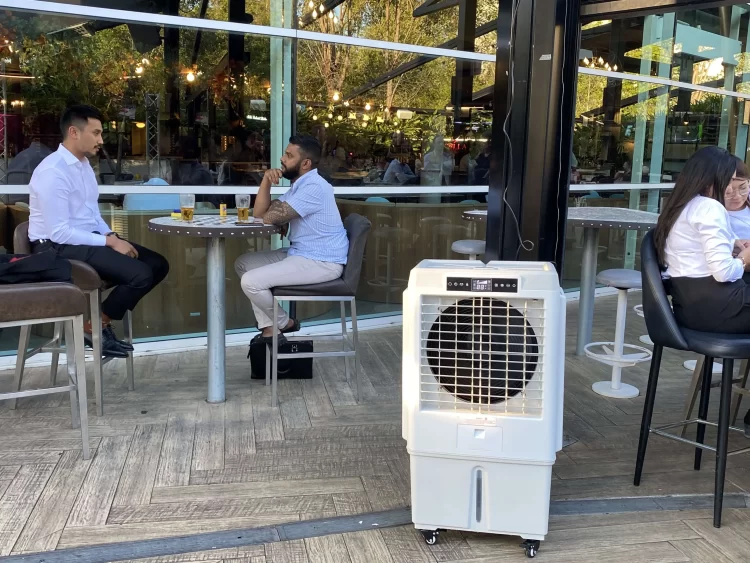
Portable evaporative coolers use water evaporation to produce a cooling effect. They are generally more suitable in drier conditions and become less effective as humidity rises.
This makes the local conditions an important consideration. Australia’s Energy.gov.au guidance also notes that portable evaporative coolers can add humidity to an indoor space.
They may suit an apartment where lighter, localised cooling is sufficient, but they operate differently from refrigerated air conditioning.
3. Spot Coolers
Spot coolers are designed for concentrated cooling rather than conditioning a whole apartment.
They can be useful when only one area needs attention, such as a bedroom during a repair, a study being used as a temporary workspace or a particular area affected by a renovation.
This approach can be practical when cooling requirements are local rather than spread across the entire property.
4. Tower Fans
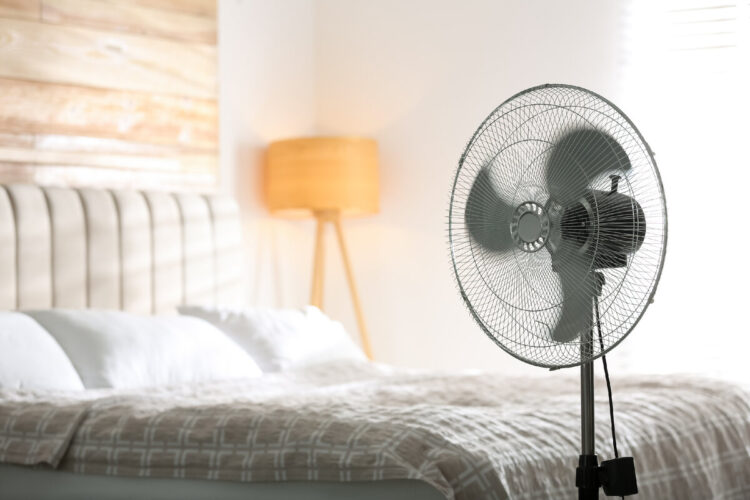
Tower fans are compact and easy to position, making them convenient for bedrooms, living rooms and home offices.
They are particularly useful when the priority is airflow and personal comfort rather than active temperature control. Their slim footprint can also be helpful where apartment floor space is limited.
No permanent installation is required, which makes them straightforward for renters.
5. High-Velocity Fans
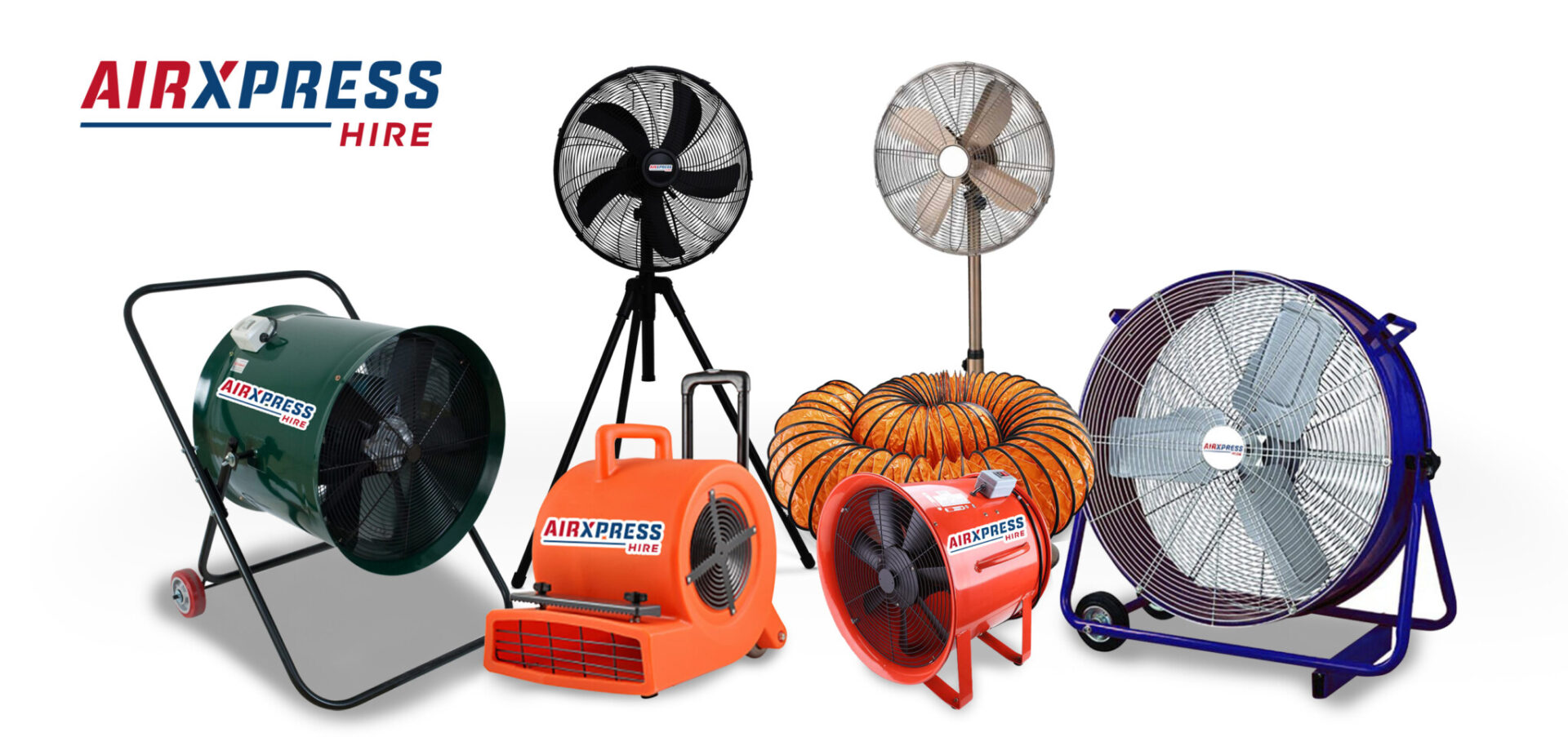
High-velocity fans are designed to move larger volumes of air with stronger airflow than many conventional household fans.
They can suit larger living areas, open-plan apartments or spaces where ordinary fan airflow isn’t enough. They are also useful alongside refrigerated cooling when additional circulation is required.
Their main consideration is airflow strength and operating noise, particularly in smaller apartments.
6. Ceiling Fans
An existing ceiling fan can provide useful air circulation without bringing another appliance into the apartment.
Because the equipment is already installed, there is no setup period or additional floor space required. It can also work alongside another cooling system when air movement needs to be improved.
For apartments without an existing ceiling fan, however, installing one becomes a separate property and installation consideration.
7. Window Air Conditioners
Window air conditioners provide refrigerated cooling through a window or suitable opening. They can be an option where a room needs dedicated cooling but a conventional split system isn’t being installed.
The main issue in an apartment is whether the installation is permitted and physically practical. NSW Planning provides exempt-development provisions for certain air-conditioning installations, including some apartment balcony arrangements, but strata by-laws can still affect where and how equipment is installed.
For rentals and strata properties, check the applicable rules before proceeding.
8. Temporary Split-System Cooling
Temporary split-system cooling provides a more conventional AC arrangement, with separate indoor and outdoor components.
It can be considered when cooling is required for a longer temporary period, such as while an existing system is being replaced. However, the installation is more involved than a portable AC and requires suitable locations for the components.
Property requirements, professional installation and strata considerations may therefore need to be addressed before this option is used.
9. Commercial-Grade Temporary Cooling
Commercial-grade temporary cooling is relevant when a standard household unit isn’t sufficient for the space or application.
For an apartment, this could include a large open-plan property, a major renovation or an extended HVAC shutdown affecting a substantial area. It can also be relevant to shared building spaces.
The focus here is capacity. Equipment should be selected according to the actual area and cooling load rather than simply choosing the largest available system.
10. Multi-Room Temporary Cooling
Some temporary cooling problems involve several occupied rooms rather than one specific area.
For example, during an extended AC repair, separate portable units could be used in bedrooms, living areas and a home office according to where cooling is needed. This can be more practical than relying on one unit positioned far from the occupied rooms.
Unused rooms can generally be left outside the temporary cooling setup, allowing equipment to focus on the areas that matter most.
Quick Comparison of Temporary Cooling Options
| Option | Cooling approach | Suitable for |
| Portable AC | Refrigerated cooling | Individual rooms |
| Evaporative cooler | Water-based evaporative cooling | Suitable lower-humidity conditions |
| Spot cooler | Targeted refrigerated cooling | One specific area |
| Tower fan | Air circulation | Bedrooms and living areas |
| High-velocity fan | Strong air circulation | Larger or open areas |
| Ceiling fan | Overhead air circulation | Existing installations |
| Window AC | Refrigerated cooling | Individual rooms where permitted |
| Temporary split system | Refrigerated cooling | Longer temporary requirements |
| Commercial-grade cooling | Higher-capacity cooling | Larger or demanding spaces |
| Multi-room setup | Multiple cooling units | Several occupied rooms |
How to Choose the Right Temporary Cooling Solution
Consider the Space
Start with the area that actually needs cooling. A bedroom, open-plan living area and multi-room apartment will have different equipment requirements.
Check the Setup
Look at windows, available floor space, ventilation and access to suitable power. Portable ACs, in particular, need an appropriate way to discharge hot air.
Consider Humidity
Humidity can influence whether evaporative equipment is appropriate. If moisture levels are already high, refrigerated cooling may be more suitable.
Think About Noise
Consider where the equipment will operate and whether it needs to run overnight. Noise can be more noticeable in bedrooms and smaller apartments.
Check Strata and Rental Requirements
Temporary equipment isn’t automatically exempt from property rules. External units, window installations and balcony equipment may require additional checks.
NSW Government guidance notes that strata schemes have their own by-laws covering matters such as balconies and renovations.
Match the Duration
A few hot days may call for a different solution from several weeks of renovation or an extended AC repair. Consider the rental, purchase and installation implications before deciding.
Temporary Cooling vs Permanent Air Conditioning
| Temporary Cooling | Permanent AC | |
| Installation | Usually limited or setup-dependent | Professional installation |
| Flexibility | Can be moved or hired short-term | Fixed to the property |
| Deployment | Generally quicker | Usually takes longer |
| Building changes | Often limited | May involve installation requirements |
| Typical use | Repairs, rentals and short-term needs | Long-term cooling |
Temporary equipment is particularly useful when the need has a defined end date or permanent installation isn’t practical. A permanent system is designed around the property’s ongoing cooling requirements.
When Is Temporary Cooling Useful?
Temporary cooling can be useful during:
- Air-conditioning breakdowns while repairs are being arranged
- System replacement when an existing unit is being removed or upgraded
- Apartment renovations that affect existing cooling
- Rental periods where permanent modifications aren’t practical
- Short-term accommodation without adequate air conditioning
- Multi-room disruptions where several occupied areas need temporary cooling
The choice comes down to the space, the required cooling method and how long the arrangement will be needed.
Tips for Using Temporary Cooling in an Apartment
Keep filters and air inlets clear. Dust and obstructions can affect airflow and equipment performance.
Leave clearance around the equipment. Don’t place furniture directly against air outlets or inlets.
Set up exhausts correctly. Portable AC exhaust air should be discharged outside rather than back into the room.
Follow operating instructions. Pay attention to electrical requirements, drainage, ventilation and other instructions supplied with the equipment.
Avoid overloaded circuits. High-load cooling equipment should be connected using an appropriate electrical setup.
Use doors and windows appropriately. The correct approach depends on the cooling system and its ventilation requirements.
FAQs
What is the most suitable temporary cooling option for an apartment?
There isn’t one option for every apartment. Room size, humidity, available ventilation, noise and the length of the requirement all affect the choice.
Can I hire a portable air conditioner for a Sydney apartment?
Yes. Portable air conditioners can be hired for temporary residential requirements such as AC repairs, renovations and short-term accommodation. AirXpress Hire offers portable AC hire in Sydney.
Are evaporative coolers suitable for Sydney’s climate?
They can be suitable in the right conditions, but performance decreases as humidity rises. They also add moisture to the air, so they aren’t equivalent to refrigerated AC.
Can temporary cooling be used while my AC is being repaired?
Yes. Portable ACs, spot coolers and fans can be used to maintain more comfortable conditions while a permanent system is being repaired or replaced.
Do temporary air conditioners need apartment approval?
It depends on the equipment and installation method. Some installations may qualify under NSW exempt-development provisions, but strata by-laws and property requirements can still apply.
How long can I hire temporary cooling equipment?
Rental periods depend on the equipment and supplier. Short-term hire can cover several days, while longer arrangements can be used during renovations, system replacement or extended repairs.
Final Thoughts
The right temporary cooling option really depends on what the apartment needs at the time. A portable AC can make sense when you need to bring the temperature down in a particular room, while a fan, spot cooler or combination of equipment may work better in other situations.
If the cooling is only needed for a few days or weeks, hiring can be more practical than buying equipment that may have little use once the problem is resolved. Before making that decision, consider the space you’re cooling, how long you’ll need the equipment, the available setup, humidity and how much cooling you actually need.
Need temporary cooling for your Sydney apartment? Call 0451663033 to discuss your space, timeframe and cooling requirements.